Seamless Matrix Switcher vs. Video Wall Processor: What's the Difference?
2026-09-05
Seamless matrix switcher vs. video wall processor: both route video, but they are built for different jobs.
A seamless matrix switcher (for example the VEXWALL hybrid matrix 8×8 to 40×40) routes many physical sources — HDMI, DVI, VGA, AV, SDI and HDBaseT — to any number of displays, switching without black screens or interruptions. It is the right device when your task is routing: which source goes to which screen, instantly and reliably.
A video wall processor (for example the K, D or P series) is built to splice, roam and overlap multiple sources across a single large wall. It takes independent sources and arranges them as windows anywhere on a display wall — one source full wall, others in windows, with arbitrary placement and scaling.
How do you decide?
Choose a seamless matrix when: you have many sources and many displays; the main requirement is switching between them cleanly (no black screens); you do not need to splice multiple sources onto one shared canvas.
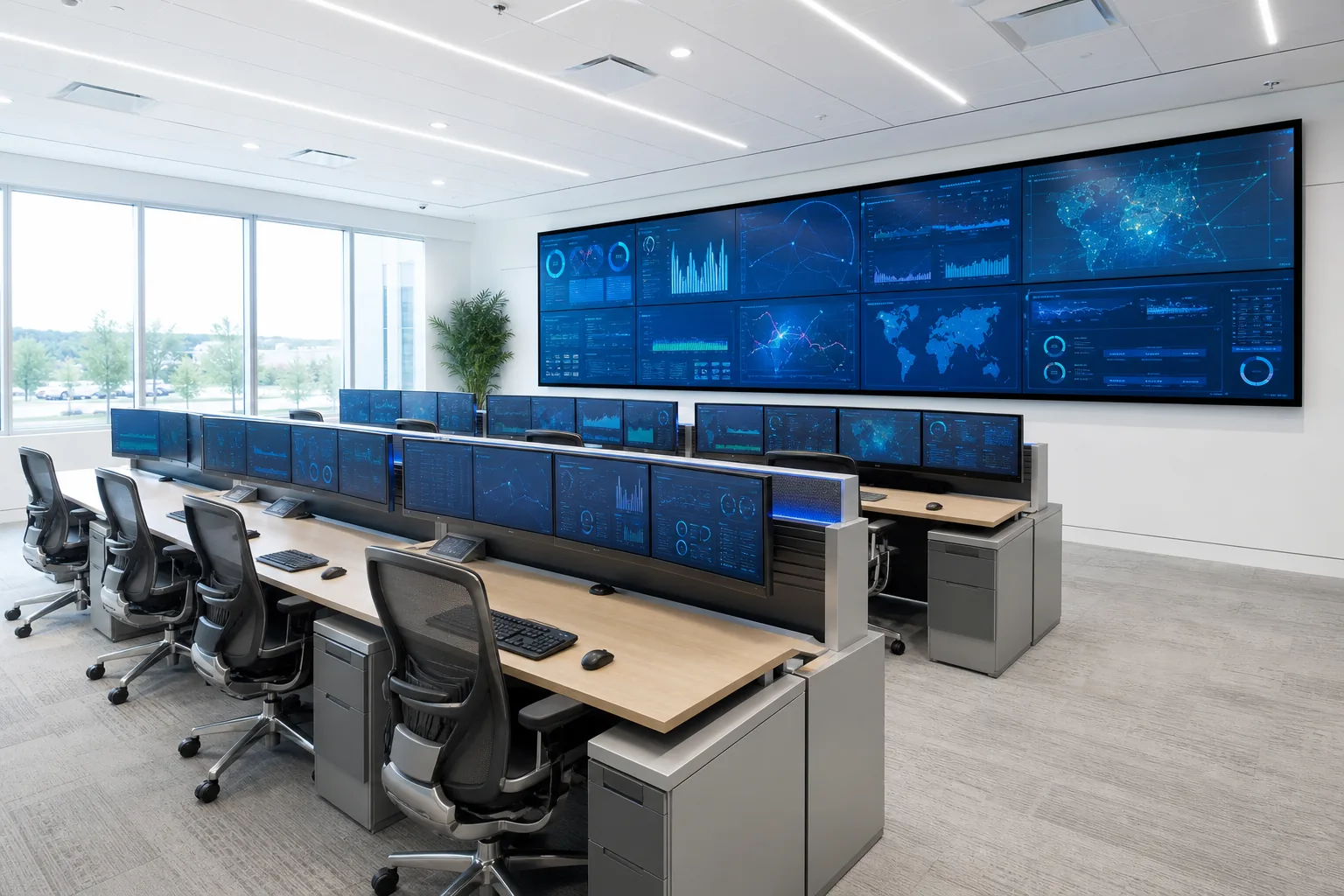
Choose a video wall processor when: you need multiple sources visible on one wall at the same time; you want arbitrary windowing, roaming and overlapping; you are building a control room, command center or monitoring wall where several signals must be monitored side by side.
A real project often needs both. A control room may use a matrix to route sources around the facility and a processor to compose the wall in front of the operator. The two devices are complementary stages in the same signal path.
VEXWALL builds both families: seamless hybrid matrix switchers from 8×8 up to 40×40, and pure-hardware video wall processors with no operating system for stable 24/7 walls.
Tell our engineers your source count, display count and whether sources must appear on one shared wall — we will recommend the right combination.
Key questions, answered
Not sure which configuration fits?
Tell our engineers your source list and screen layout — we'll confirm the right model.